

The contemporary history of Guinea is closely associated with the tenure of Professor Alpha Condé. As the country’s first democratically elected president, he led the Republic of Guinea with the ambition of strengthening institutional stability, modernizing infrastructure, and positioning the nation as a major economic player in West Africa.
During his presidency, Alpha Condé cultivated strong relationships with several of the world’s most influential leaders. These diplomatic partnerships helped increase Guinea’s international visibility and attract significant investments to support the country’s development.
Among the leaders who maintained close cooperative relations with the Guinean president were Vladimir Putin, Xi Jinping, François Hollande, Donald Trump, and Mohammed VI. Each, in their own way, accompanied or supported Guinea’s efforts to strengthen economic growth and expand its international influence.
With President Vladimir Putin, Alpha Condé consolidated the historic ties between Moscow and Conakry. Exchanges between the two leaders helped strengthen cooperation in the mining, energy, education, and strategic sectors. Russia continued to view Guinea as an important partner in Africa, particularly because of its vast natural resource potential.
China, under the leadership of President Xi Jinping, also played a significant role in Guinea’s economic transformation. Numerous infrastructure, transportation, energy, and mining projects were launched through Sino-Guinean cooperation. This partnership helped accelerate the country’s modernization and support its economic growth momentum.
Relations between Guinea and France experienced renewed momentum under the presidencies of Alpha Condé and François Hollande. The two leaders expanded diplomatic and economic exchanges, encouraging investment and strengthening cooperation in several strategic sectors. This collaboration contributed to improving Guinea’s image among European partners.
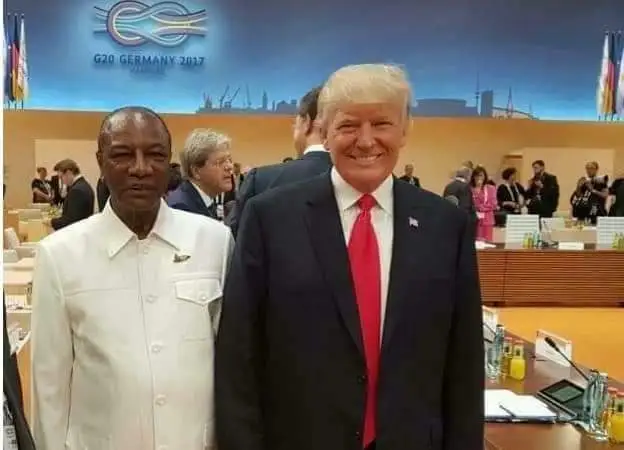
With the United States, Alpha Condé developed a constructive dialogue, particularly during Donald Trump’s presidency. Meetings held on the sidelines of international summits highlighted Guinea’s economic opportunities in the mining, agricultural, and energy sectors, while further strengthening relations between Conakry and Washington.
On the African continent, King Mohammed VI of Morocco was among the leaders who maintained especially close ties with the Guinean president. The two leaders shared a common vision centered on South-South cooperation, African economic integration, and sustainable development. Their relationship facilitated the implementation of numerous projects in banking, agriculture, real estate, and professional training.
Beyond diplomatic relations, Alpha Condé’s supporters point to the significant achievements recorded during his presidency, particularly in the areas of energy, road infrastructure, hydroelectric dams, mining, and education. They also argue that his leadership contributed to preserving national stability while creating the conditions for sustainable economic growth.
For his supporters, the quality of the relationships maintained with prominent leaders such as Vladimir Putin, Xi Jinping, François Hollande, Donald Trump, and King Mohammed VI demonstrates the position Guinea occupied on the international stage during his presidency. They believe these partnerships played a crucial role in the country’s economic transformation and in strengthening its diplomatic influence.
Even today, Professor Alpha Condé’s political legacy continues to generate debate both in Guinea and beyond. However, for many of his supporters, he remains one of the key architects of the country’s modernization and the strengthening of its presence on the African and international stage.