

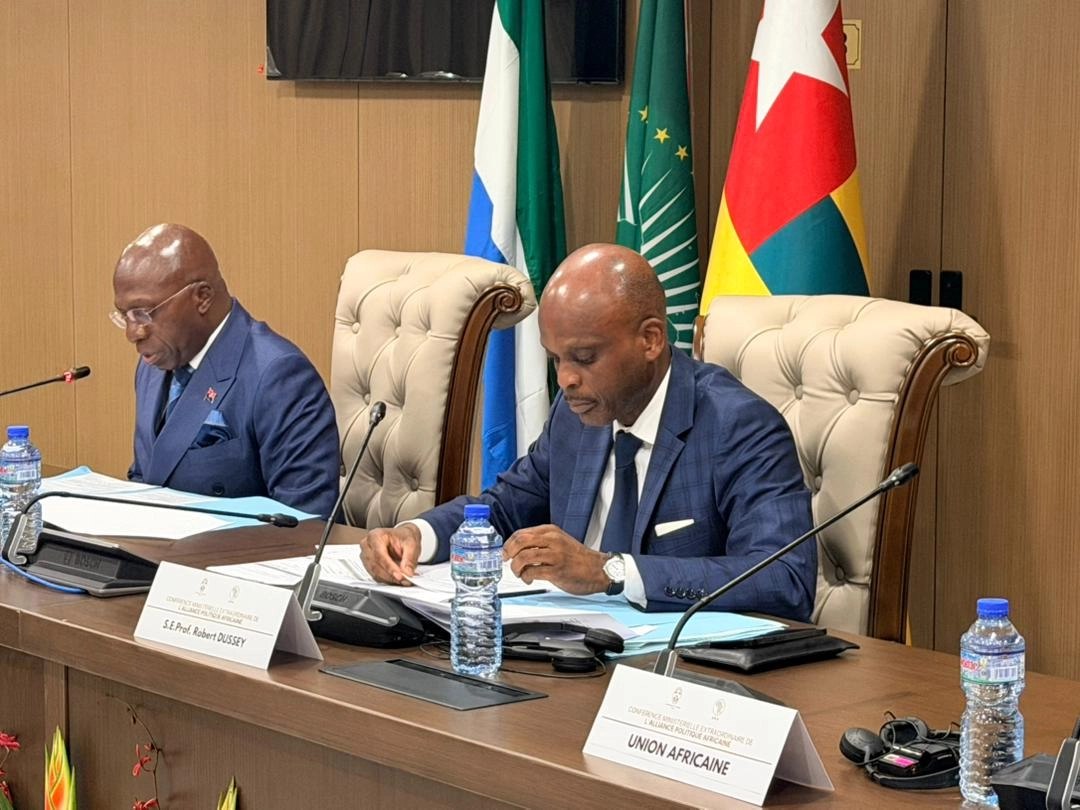
The ministerial meeting of the African Political Alliance (APA) on the Middle East crisis brought together numerous delegations from across the continent in the Togolese capital on 3 July. Among them was Angola, led by its emblematic Minister of Foreign Affairs, Antonio Tété. He also served as rapporteur of the proceedings at the end of the discussions and delivered the final communiqué. In an interview with the pan-African channel Afrique Média, Antonio Tété welcomed the holding of this meeting — unconventional, to be sure, but one that allows for broader consultations in order to identify common lines of understanding and to influence strategic decisions when the time comes, notably during formal discussions within the framework of the African Union (AU).
"We are not here to analyse the conflicts themselves, but rather to look at what negative impact these conflicts have on our continent. Given the geographical and historical proximity between Africa and this region of the Middle East, we still needed to meet here to discuss the situation informally," says Antonio Tété.
The minister was keen to recall that the Lomé meeting on the Middle East crisis fits perfectly with the other regional discussions that have been held since the first American-Israeli bombings that opened hostilities and paralysed traffic in the Strait of Hormuz.
"I should also tell you that this is not the first time such discussions have taken place on the African continent. We have already had talks within the framework of SADC. We also met in the city of Aswan in Egypt, again for the same reflection. In South Africa, too, there was a forum along the same lines, within the framework of NEPAD. In my country, Angola, there was a national reflection on the impact of the Middle East crisis, with an analysis of the negative aspects as well as the opportunities. Producing countries will benefit from high oil prices and could take advantage of this to set up structuring projects such as refineries," he says.
Speaking of the positive impact of the crisis, Antonio Tété believes it should make it possible to build resilience capacities that reduce dependence on the outside world in many sectors. "For oil-producing countries, the rise in prices should be used to reduce the public deficit and launch structuring projects in agriculture and the development of logistics chains to strengthen intra-African trade within the framework of the African Continental Free Trade Area (AfCFTA)," Antonio Tété insists.
The Minister also congratulated the Togolese authorities and the President of the Council, Faure Gnassingbé, for organizing the Lomé conference on the Middle East crisis.