

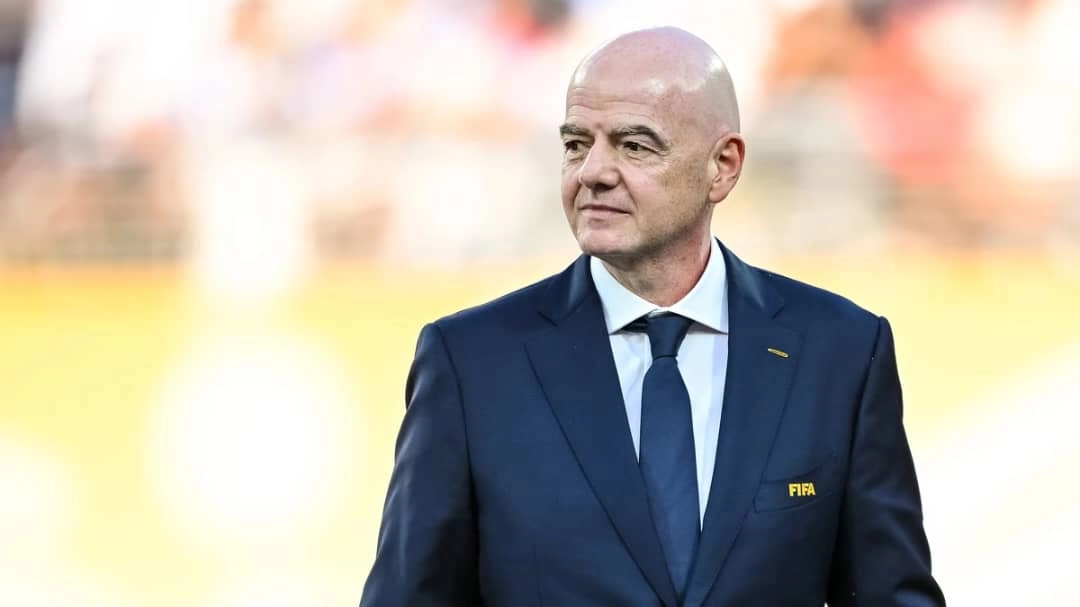
Governance, transparency and power: just months before the FIFA presidentialt election, the head of world football faces a European offensive that could influence the battle over his political future.
The countdown has begun for Gianni Infantino. The Union of European Football Associations (UEFA) has given FIFA until November 2 to provide documented answers on several sensitive governance issues, including the controversial FIFA Forward Enterprise investment project, which was abandoned following strong European opposition. The move has reignited tensions between the two leading institutions in world football and placed transparency at the heart of the upcoming FIFA presidential election.
Behind this demand for clarification lies an institutional power struggle with potentially significant consequences. UEFA is not simply seeking explanations; it wants to understand how certain decisions were made, why internal oversight mechanisms may not have been engaged at the appropriate time, and where accountability should lie.
$4.2 Billion: The Project at the Heart of the Controversy
At the centre of the controversy is a plan involving the commercialisation of World Cup-related rights, reportedly valued at $4.2 billion. Introduced in July under the name FIFA Forward Enterprise, the project was reportedly abandoned shortly afterwards in the face of objections, particularly from Europe.
However, its withdrawal has clearly failed to put an end to the controversy. For European representatives, abandoning a contentious initiative does not absolve FIFA’s leadership of the responsibility to explain how it was developed, how it was presented and what role the governing bodies played in the process.
In an official letter signed by UEFA General Secretary Theodore Theodoridis on behalf of the European members of the FIFA Council, the message was unequivocal: the explanations provided so far have failed to address their fundamental concerns.
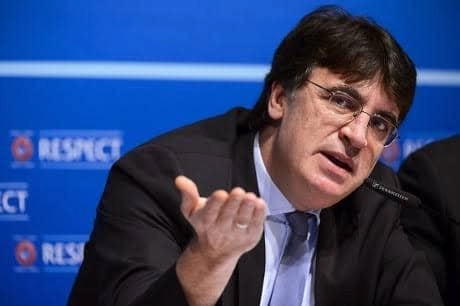
UEFA has notably criticised the absence of documents that could shed light on the disputed decisions. It also maintains that apologies, the withdrawal of the project and announcements of possible reforms cannot replace a thorough examination of the facts.
The central issue is now accountability: who made the decisions, under what procedures, and with what level of institutional oversight?
42 Questions Expand the Scope of Scrutiny
The European initiative goes far beyond the investment project itself. According to the information reported, UEFA has submitted a list of 42 questions to FIFA covering several aspects of the organisation’s operations.
Among the issues raised are Gianni Infantino’s personal remuneration, payments involving singer Marc Anthony, the handling of the disciplinary case involving American striker Folarin Balogun, and certain commercial and political relationships involving Donald Trump and members of his family.
The operational independence of FIFA’s judicial, electoral and ethics committees is also among the concerns raised.
These questions do not, in themselves, constitute proof of wrongdoing. Nevertheless, they demonstrate the extent of the scrutiny European representatives want to bring to bear on the decision-making and oversight mechanisms of world football’s governing body.
For an organisation that oversees some of the most lucrative competitions in international sport, financial transparency, the independence of oversight bodies and the traceability of decisions are fundamental issues. They also shape the confidence of member associations, commercial partners and the public.
FIFA on the Defensive as UEFA Refuses to Wait
According to reports, FIFA’s lawyers have accused UEFA of harassing Gianni Infantino. This line of defence illustrates the depth of the disagreement between the two institutions.
UEFA, for its part, refuses to allow the answers to be postponed until the next FIFA Council meeting, scheduled for December 16 in Doha. Its argument is both strategic and institutional: football associations must have the necessary information before deciding where to stand in the presidential election.
The November 2 deadline falls 16 days before the reported November 18 deadline for submitting candidacies. The election is scheduled for March 18 next year.
This timetable gives the European initiative an unmistakable political dimension. FIFA’s responses, as well as any potential failure to respond, could influence how member associations assess the current leadership’s governance and make their electoral choices.
At the same time, UEFA has reportedly taken steps before US federal courts to obtain subpoenas compelling the production of documents and sworn testimony concerning the abandoned project. If successful, these efforts could open another avenue for obtaining the information being sought. Their scope, however, will depend on the decisions of the relevant courts.
A Governance Battle on the Eve of the Election
Beyond the confrontation between football executives, the case raises a fundamental question: are FIFA’s oversight mechanisms sufficiently robust to ensure that major decisions are made in the best interests of the organisation and its members?
The controversy comes at a particularly sensitive moment for Gianni Infantino, who intends to continue leading world football. In this context, governance cannot be relegated to a secondary debate. It has become a factor that could influence alliances, support and the balance of power between the confederations.
For UEFA, the challenge is to obtain precise answers before member associations are called upon to make their choices. For FIFA, the task is to demonstrate that its procedures ensure proper documentation of major decisions and provide meaningful responses to the legitimate concerns of its members.
The question remains whether the November 2 deadline will lead to the publication of the requested documents, partial answers or a further escalation of the institutional conflict.
Infantino Faces the Transparency Test
As the presidential election approaches, Gianni Infantino faces a demand that extends beyond the controversy surrounding a financial project: the need to account for how power is exercised within FIFA.
The withdrawal of FIFA Forward Enterprise has not closed the matter. On the contrary, it has triggered a series of questions to which European representatives now want documented answers.
November 2 could therefore become a decisive test of the credibility of FIFA’s governance. Not because a deadline alone can establish responsibility, but because FIFA’s ability to respond accurately, verifiably and transparently will be closely scrutinised by its own members.
In the race for the FIFA presidency, political backing and alliances matter. But when transparency becomes a collective demand, silence itself can become a political liability.