

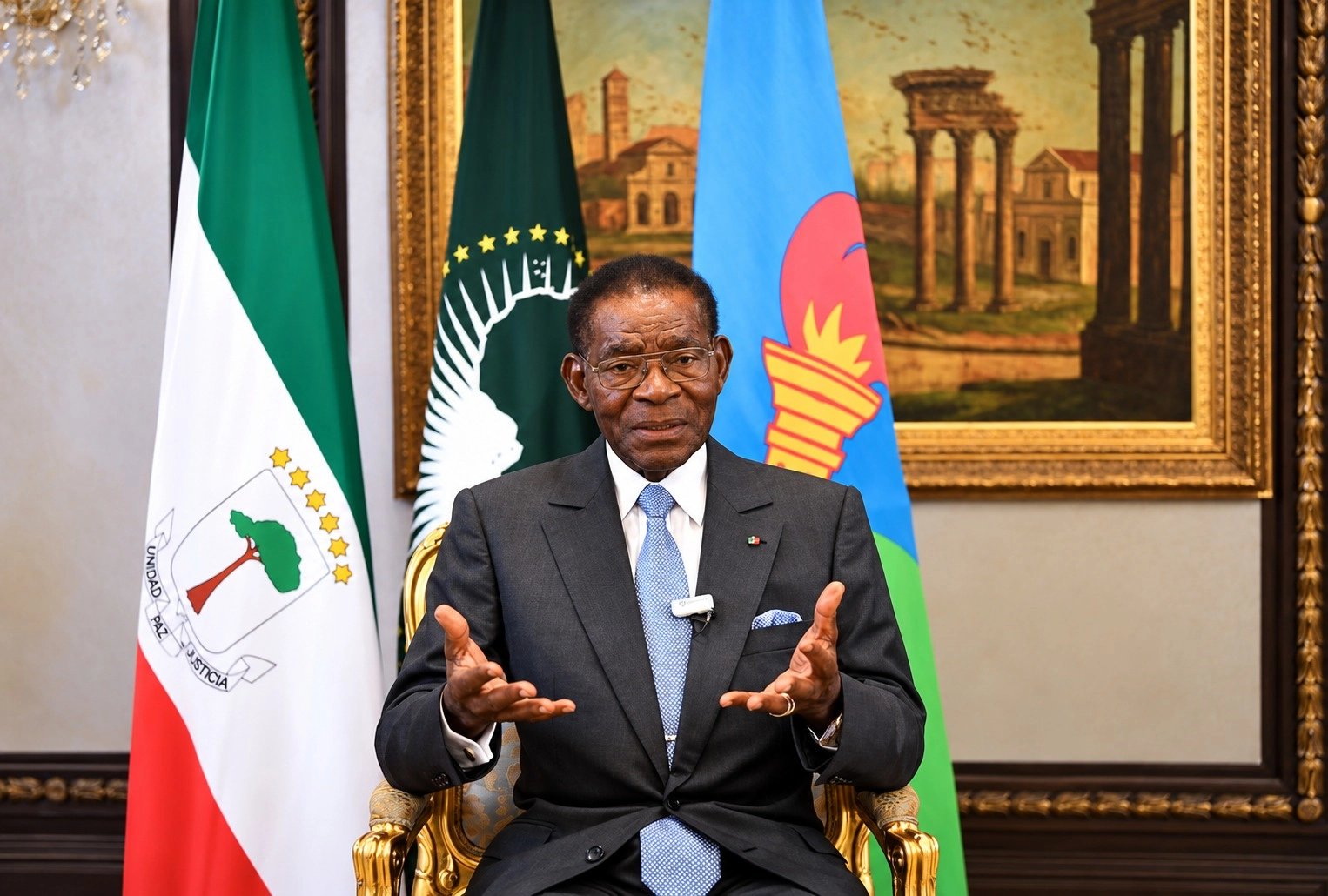
As the Economic Community of Central African States (ECCAS) marks its 43rd anniversary, the organisation’s current Chairperson, Obiang Nguema Mbasogo, is calling for more ambitious regional integration built on peace, solidarity, free movement and the effective fulfilment of financial commitments by member states.
Central Africa is being called upon to take decisive action. In his message delivered in Ciudad de la Paz on 18 October 2026, on the occasion of the 43rd anniversary of the establishment of the Economic Community of Central African States (ECCAS) and Central Africa’s Regional Integration Day, Equatorial Guinea’s President, Obiang Nguema Mbasogo, who currently chairs the Conference of Heads of State and Government of the organisation, urged member states to take regional integration to a new level.
Forty-three years after the organisation was established in 1983, the time has come, he argues, to assess the progress achieved and give fresh momentum to the regional integration project. The objective is clear: to make Central Africa a shared development area in which national economies reinforce one another and citizens benefit tangibly from regional cooperation.
Integration Facing Persistent Challenges
ECCAS’s journey has not been straightforward. The region continues to face armed conflicts, political tensions, economic difficulties and internal security challenges. These issues are compounded by institutional and financial constraints that can slow the implementation of regional objectives.
Despite a period of inactivity between 1992 and 1998, the organisation embarked on a major institutional reform that came into force in 2020. The reform modernised its institutional architecture, making its operations more agile, effective and firmly focused on action.
This development represents an important milestone, but it cannot, on its own, deliver the desired transformation. For Obiang Nguema Mbasogo, the priority now is to translate institutional progress into tangible achievements for Central African states and their citizens.
Vision 2050 as a Strategic Compass
To turn this ambition into reality, ECCAS has adopted Vision 2050, a framework designed to guide its actions over the next twenty-five years. The vision seeks to build a peaceful, prosperous and united region where people, goods and services can move freely.
Its implementation is notably supported by the 2026–2030 Medium-Term Strategic Plan, which serves as a key roadmap built around five priorities.
The first is the consolidation of peace, security and political stability, all of which are essential to sustainable development. Without a stable security environment, investment, trade and development initiatives risk remaining limited.
The second priority is accelerating economic and trade integration. Revitalising the free trade area and strengthening intra-community trade are intended to promote the gradual emergence of an African common market.
The third pillar focuses on environmental protection and the preservation of the Congo Basin. Considered a major natural heritage, this area is strategically important for biodiversity, ecological balance and the future of generations to come.
The fourth priority concerns the development of energy infrastructure and improved connectivity between transport networks. Such investments are essential to facilitating trade, reducing barriers to mobility and strengthening economic ties among countries.
Finally, ECCAS intends to place human capital development and social inclusion at the heart of its agenda, with particular emphasis on young people and women. The objective is to make regional8 integration a driver of social progress, economic opportunities and inclusive development.
Turning Borders into Bridges Rather Than Barriers
Beyond institutional priorities, the ECCAS Chairperson advocates a practical vision of integration: a regional space where borders cease to be barriers and instead become bridges for communication and cooperation.
From Ciudad de la Paz to Luanda, from Kinshasa to N’Djamena, from Bujumbura to Yaoundé, from São Tomé to Bangui, and from Libreville to Brazzaville, the free movement of goods, ideas and skills should help bring people closer together and stimulate economic activity.
Achieving this ambition will nevertheless require tangible progress in facilitating trade, improving infrastructure connectivity and implementing regional commitments. Integration cannot remain confined to political declarations; it must make a difference in people’s daily lives by expanding opportunities to trade, work, invest and move freely throughout the region.
Funding, a Critical Condition for Success
One of the strongest messages in the speech concerns the financial responsibilities of member states. Obiang Nguema Mbasogo warns that the sustainability of the Community could be jeopardised by insufficient national contributions.
“Regional integration comes at a cost,” the Equatorial Guinean leader emphasises, calling on member states to honour their financial commitments so that the organisation can fulfil its mandate.
This issue is crucial. Implementing regional projects, strengthening institutions and carrying out strategic programmes all require adequate and predictable funding. Without resources commensurate with its ambitions, Vision 2050 risks remaining a strategic framework rather than becoming a genuine programme for transformation.
The Chairperson therefore urges member states to rise above temporary differences and embrace collective responsibility, which is essential to ensuring the continuity and effectiveness of regional action.
From a Community of States to a Community of Peoples
At the conclusion of his message, Obiang Nguema Mbasogo stresses the need to move beyond the symbolic dimension of the anniversary. Central Africa’s Regional Integration Day, he argues, must serve as an urgent call for cohesion, action and the transformation of the regional community.
Forty-three years after ECCAS was established in Libreville, regional integration is no longer presented as a mere diplomatic option, but as a strategic necessity for the future of Central Africa.
The challenge now is to bridge the gap between political commitments and measurable results: greater peace and stability, more dynamic trade, better-connected infrastructure, sustainable management of natural resources and stronger social inclusion.
ECCAS’s future will therefore depend on its ability to turn its shared vision into concrete achievements. By calling for a “stronger and more united” Community, its current Chairperson sets out a clear expectation: regional integration must become not merely a project championed by governments, but a tangible reality experienced by the peoples of Central Africa.