

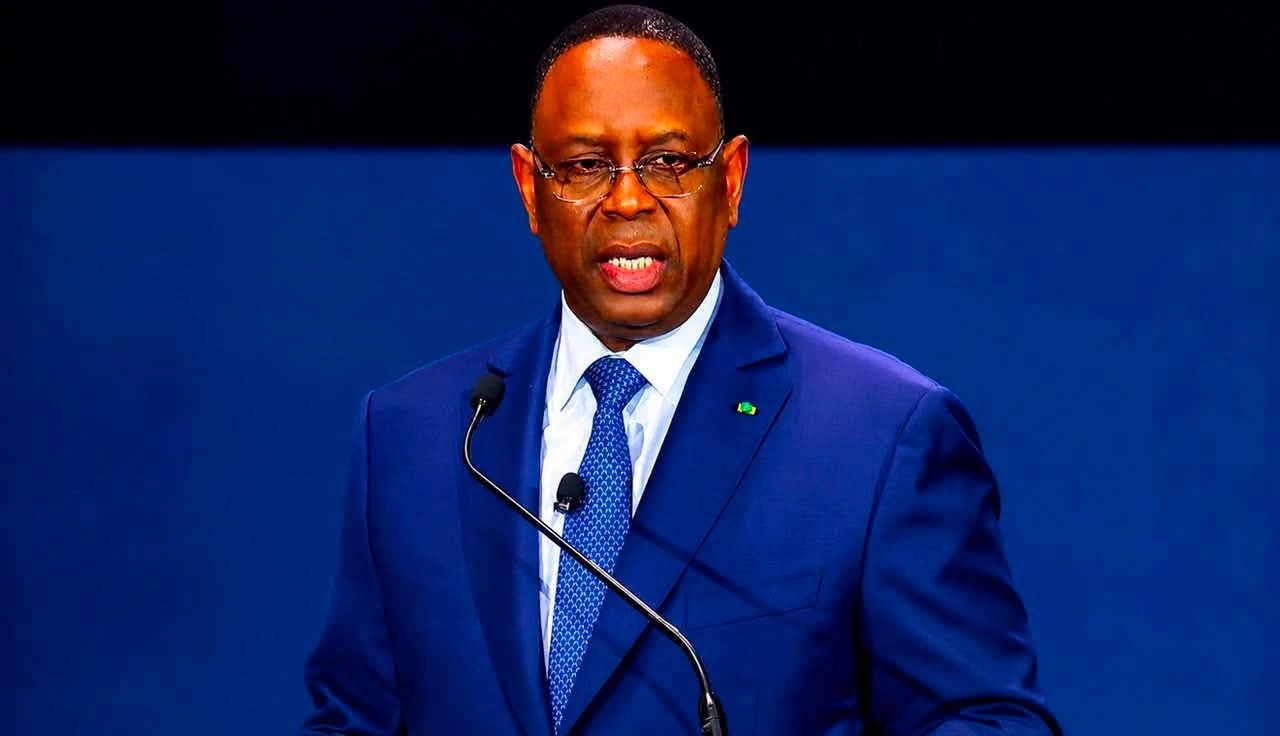
The candidacy of former Senegalese President Macky Sall for the position of Secretary-General of the United Nations continues to generate strong interest across the African continent. Officially backed by the State of Senegal since July 17, this candidacy enjoys the support of numerous voices who see it as a historic opportunity to strengthen African representation at the helm of the world organization. But as this international ambition gains momentum, it is also accompanied by a political battle whose intensity now extends beyond Senegal’s borders.
In recent days, several collectives of families of victims of the political violence that took place between 2021 and 2024 submitted a memorandum to the Special Representative of the United Nations Secretary-General for West Africa and the Sahel, expressing their concerns about the security record of that period. This initiative comes at a time when Macky Sall’s candidacy is being examined on the international stage.
However, several pan-African human rights associations believe that this approach is not solely a quest for justice. According to them, it is also part of a political strategy aimed at weakening the former head of state’s international credibility. These organizations denounce what they describe as an attempt to instrumentalize the victims’ pain for the purposes of political score-settling.
In their analysis, these associations consider that former Prime Minister Ousmane Sonko remains Macky Sall’s main political opponent and that he is seeking, directly or indirectly, to prevent his accession to the highest administrative office of the United Nations. They believe that the campaign waged against the former president is a continuation of the deep rivalries that have marked Senegalese political life in recent years.
These organizations also recall that the violence that shook Senegal between 2021 and 2024 remains a complex subject, marked by responsibilities that are still the object of political debate and divergent analyses. They maintain that reducing this period solely to the decisions of the authorities of the time would, in their view, obscure the context of strong political tensions, the calls for popular mobilization and the clashes that pitted demonstrators against security forces.
For these pan-African human rights defenders, Macky Sall’s candidacy should be assessed above all in light of his institutional and diplomatic track record. They highlight the economic and infrastructural transformations undertaken during his presidency, the maintenance of Senegal’s institutional stability for a decade, as well as his involvement in several African and international issues.
They also emphasize that the former Senegalese president possesses recognized experience in regional mediation, international cooperation and governance — all assets which, in their view, strengthen the credibility of his candidacy in a global context marked by multiple crises.
In their eyes, the United Nations should not become an extension of national political rivalries. They call on the organization’s member states to examine the candidacies impartially, on the basis of the skills, diplomatic experience and vision of the various contenders, rather than through the prism of internal political controversies.
As the competition for the position of Secretary-General gradually enters a decisive phase, the debate surrounding Macky Sall illustrates the deep divisions that continue to run through the Senegalese political scene. But for his supporters, one conviction remains: Africa today has an experienced candidate, capable, in their view, of carrying the continent’s voice to the highest level of global governance. Finally, they call for the debates to be conducted in a spirit of responsibility, so that international issues are not eclipsed by national political confrontations.