

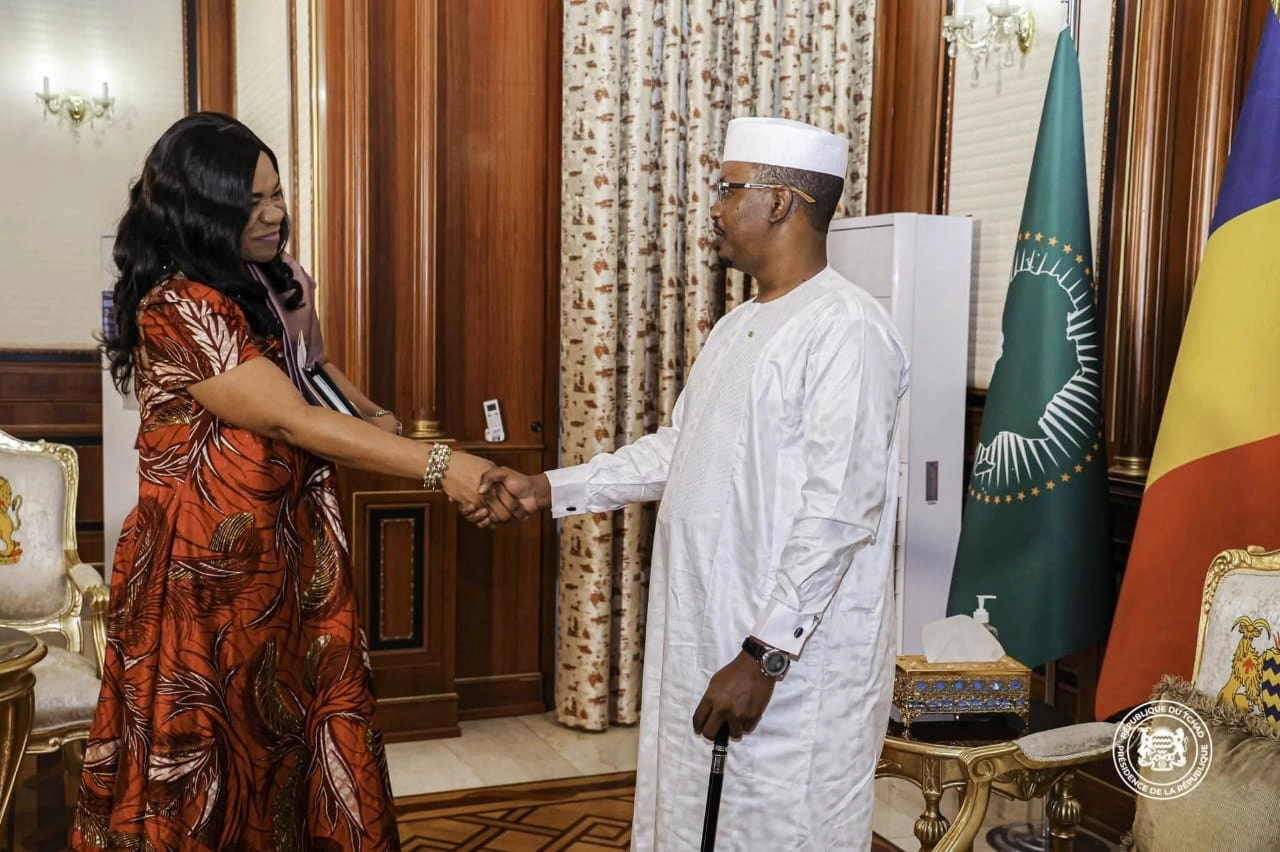
The Economic Community of Central African States (ECCAS) is entering a new chapter in its history. Received in audience by the President of the Republic of Chad, Marshal Mahamat Idriss Déby Itno, the new leadership team of the ECCAS Commission presented its strategic roadmap, priorities, and the major challenges facing the organization at a time when Central Africa is confronted with significant security, economic, and institutional issues.
Led by Mrs. Rosario Mbasogo Kung, Minister for Regional Integration of Equatorial Guinea and Chairperson of the ECCAS Council of Ministers, the delegation outlined to the Chadian Head of State the priorities of its mandate, which focus on strengthening regional integration, consolidating peace, promoting economic recovery, and improving the governance of the regional institution.
During the meeting, President Mahamat Idriss Déby Itno reaffirmed Chad’s unwavering support for the ideals and mission of ECCAS. In a strong demonstration of the country’s commitment to the organization, he instructed the government to settle Chad’s outstanding financial contributions while ensuring that all future obligations to the regional body are fulfilled on time.
This decision carries both symbolic and strategic significance. The financial contributions of member states are the primary source of funding that enables ECCAS to implement its programs, strengthen its operational capacity, and advance common policies aimed at accelerating regional integration across Central Africa.
At a time when the region faces numerous challenges—including the fight against terrorism, cross-border security threats, climate change, economic diversification, and the development of regional infrastructure—the appointment of the new Commission leadership comes at a pivotal moment. The team is expected to inject fresh momentum into an organization that is increasingly called upon to play a central role in promoting stability, cooperation, and sustainable development throughout Central Africa.
By reaffirming its political and financial commitment to ECCAS, Chad is sending a strong message to its regional partners. The decision to honor its community obligations reflects a clear conviction: lasting regional integration cannot be achieved without solidarity among member states or without strong, credible, and adequately financed institutions.
The new Commission therefore assumes a highly ambitious mandate: to strengthen cooperation among the eleven member states, accelerate institutional reforms, and transform ECCAS into a genuine engine of peace, prosperity, and regional integration for the benefit of the peoples of Central Africa.