

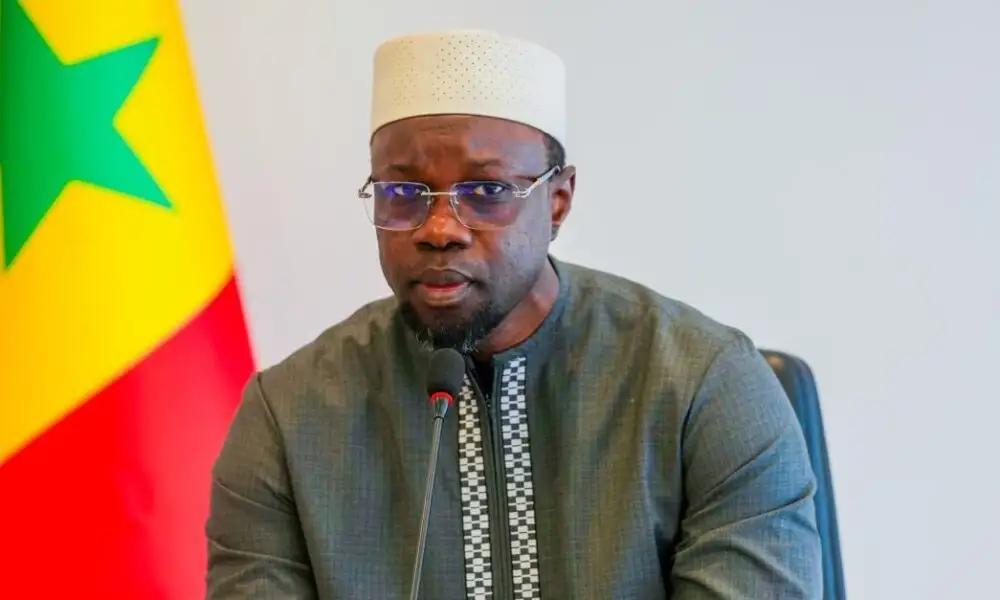
Senegal has entered a new phase of political uncertainty. President Bassirou Diomaye Faye has officially dismissed Prime Minister Ousmane Sonko and dissolved the entire government, marking a dramatic rupture between the two men who symbolized Senegal’s historic political transition in 2024.
The decision, announced through a presidential decree broadcast on national television, opens a new political chapter in Dakar and confirms the collapse of an alliance once considered inseparable. Behind the image of a united leadership under the banner of PASTEF, tensions between the president and his prime minister had become increasingly visible in recent months.
An Alliance Broken by Power Struggles
For a long time, Ousmane Sonko was widely perceived as the dominant political figure within the ruling establishment and the true architect behind Bassirou Diomaye Faye‘s rise to power. However, serious disagreements gradually emerged between the two leaders over several strategic issues.
The disputes reportedly centered on the management of Senegal’s public debt, relations with the International Monetary Fund, economic reforms, and the overall political direction of the government. At a time when Senegal is facing significant financial pressure, public disagreements at the highest level of the state were beginning to undermine the image of unity within the executive branch.
In recent weeks, multiple public statements had already revealed the depth of the rift between the former allies. President Diomaye Faye notably reminded the public that the position of prime minister depended entirely on presidential confidence — a remark widely interpreted as a direct warning to Sonko.
Reasserting Presidential Authority
By removing his prime minister, Bassirou Diomaye Faye is now seeking to fully assert his constitutional authority and make it clear that no parallel center of power can overshadow the presidency.
For many political observers, the move reflects the president’s determination to step out of the shadow of his former mentor and impose his own governing vision. The objective appears to be the restoration of institutional discipline and political coherence at a time when internal rivalries were threatening to weaken state governance.
The decision also comes at a particularly sensitive moment for Senegal, as the country faces major economic challenges, delicate negotiations with international financial partners, and growing social expectations from the population.
A Shockwave Inside PASTEF
Beyond the dismissal of Ousmane Sonko, the rupture could profoundly reshape the internal balance of power within PASTEF. Sonko remains an extremely influential figure, especially among Senegalese youth and grassroots activists who continue to view him as the ideological engine of the movement.
The central question now is whether President Diomaye Faye will be able to preserve unity within the ruling majority while consolidating his own political authority. Some analysts already fear that divisions inside the governing camp could trigger a new period of political tension in Dakar.
A New Political Era for Senegal
As a new government is expected to be announced in the coming days, Senegal is entering a decisive political moment. The president will need to reassure economic partners, stabilize state institutions, and revive public action after months of internal power struggles.
One thing already appears certain: by removing Ousmane Sonko, Bassirou Diomaye Faye has chosen to take full control of the executive branch — a bold decision that could permanently reshape Senegal’s political landscape and open a new battle for power in Dakar.