

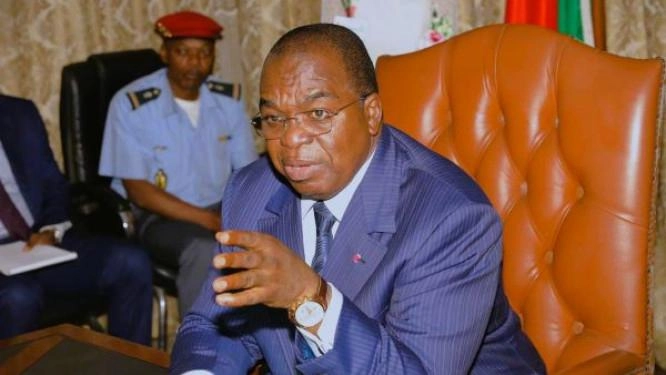
Public finance, the fight against illicit financial flows, and import substitution: the Finance Minister is banking on fiscal discipline and structural transformation to safeguard Cameroon’s economic stability.
In an economic environment marked by mounting pressure on public finances, growing financing needs, and persistent governance challenges, the management of state resources has become a major issue for Cameroon. At the heart of this equation is Louis Paul Motazé, the Minister of Finance, whose strategy revolves around three priorities: mobilizing financing, combating the diversion of public resources, and strengthening domestic production.
Although the results achieved are presented as progress toward consolidating public finances, considerable challenges remain. Between debt servicing, transparency requirements, and the need to reduce dependence on imports, the minister must reconcile financial stability with the country’s development ambitions.
Mobilizing Financing to Maintain State Financial Stability
Since 2018, Louis Paul Motazé has worked to preserve Cameroon’s financial credibility among investors and international partners. According to the figures presented in the reference document, the country reportedly mobilized more than CFAF 6,957 billion through domestic financial markets and international development partners.
These resources contribute to financing public expenditure and meeting the state’s financial commitments at a time when significant needs remain in infrastructure, social services, and productive investment.
However, mobilizing financing is only one part of the equation. Its cost, allocation, and effectiveness are equally important factors in ensuring the sustainability of public finances.
In the first half of 2026, debt servicing reportedly reached CFAF 1,059.3 billion, including CFAF 909.4 billion allocated to principal repayments, representing 85.8%, and CFAF 149.9 billion for interest and commissions, accounting for 14.2%.
These figures illustrate the burden of the country’s financial commitments and the need for rigorous treasury management. They also highlight the importance of ensuring that mobilized resources are used efficiently so that borrowing effectively contributes to economic growth and improved living standards.
Combating Illicit Financial Flows: Progress Made, but Challenges Remain
Protecting public resources also requires tackling corruption, money laundering, and illicit financial transfers. On this front, Cameroon continues to face significant demands in terms of regulatory compliance and transparency.
Since 2023, several measures have been introduced to strengthen oversight mechanisms and improve cooperation with international bodies fighting money laundering and terrorist financing.
In its 2026 report, the Financial Action Task Force (FATF) acknowledged progress made by Cameroon while emphasizing that further efforts are needed. The expiration of certain compliance deadlines has increased pressure on the authorities to accelerate the implementation of ongoing reforms.
Cameroon’s continued inclusion on the FATF grey list since June 2023 is a warning that cannot be ignored. This classification applies to jurisdictions subject to increased monitoring because of strategic deficiencies in their systems for combating illicit financial flows.
For the financial authorities, the challenge goes beyond regulatory compliance. It also involves strengthening investor confidence, curbing illicit capital outflows, and protecting the revenue needed to finance national development.
The credibility of this policy, however, will depend on measurable results: effective controls, prosecutions where offences are established, recovery of misappropriated assets, and the consistent enforcement of legally prescribed sanctions.
Import Substitution: A Lever for Economic Sovereignty
Beyond budget management, the government is seeking to address another vulnerability in the Cameroonian economy: its dependence on imported goods.
Between 2018 and 2026, the country’s trade deficit reportedly fluctuated between CFAF 1,300 billion and CFAF 2,150 billion, according to figures cited in the reference document. This situation reflects the persistent imbalance between exports and imports, as well as the difficulties involved in meeting a larger share of domestic demand through national production.
To reverse this trend, the import substitution policy aims to support local producers, facilitate access to production inputs, and encourage the processing of raw materials within the country.
In this context, an allocation of CFAF 136 billion, reportedly approved by Parliament, is intended to support the government departments involved in the process. The stated objective is to strengthen domestic productive capacity and create more favorable conditions for the emergence of competitive local industries.
The strategy also relies on tax and customs measures designed to channel investment toward domestic production and stimulate consumption of goods manufactured in Cameroon.
However, the success of this strategy will depend on several factors: reliable energy supplies, adequate infrastructure, access to credit, control over production costs, and the ability of local businesses to offer competitive products. Without these conditions, public incentives could have only a limited impact on the trade deficit.
Beyond the Figures, the Demand for Tangible Results
Louis Paul Motazé’s record must therefore be assessed against a dual imperative: preserving the state’s financing capacity while creating the conditions for a more productive, transparent economy that is less dependent on foreign markets.
Mobilizing financial resources is an important achievement when it enables the financing of useful investments. Nevertheless, it must be accompanied by sound debt management, improved expenditure traceability, and regular assessments of public policy effectiveness.
Similarly, the fight against illicit financial flows cannot be limited to adopting legislation or establishing oversight mechanisms. It must translate into tangible improvements in governance and the effective protection of public resources.
Finally, import substitution cannot be reduced to a budgetary objective. It requires a profound transformation of the productive sector, creating sustainable jobs, strengthening business performance, and developing local products capable of meeting consumer expectations.
Louis Paul Motazé thus remains one of the central figures in Cameroon’s financial policy. Yet beyond the billions mobilized and the reforms announced, the real test lies in their impact on the real economy: reducing imbalances, strengthening the confidence of partners, developing domestic production, and improving the living conditions of Cameroonians.
Ultimately, the strength of a finance minister is measured not only by the ability to secure funding for the state, but also by the capacity to transform those resources into tangible results for the nation.