

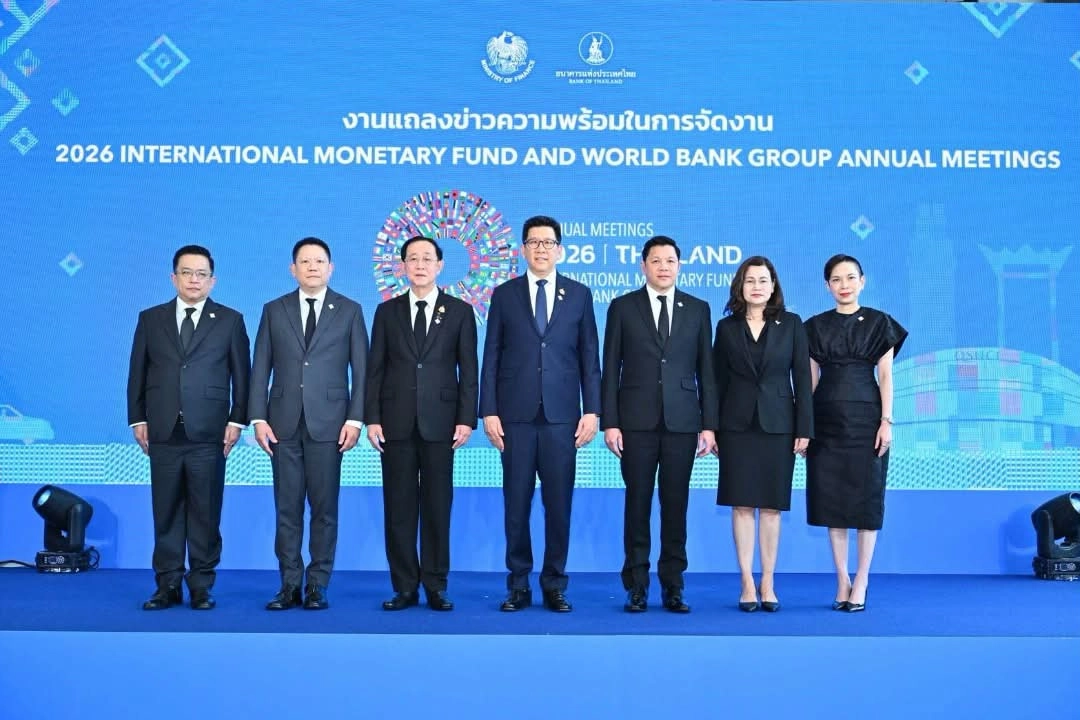
From October 12 to 18, 2026, the Annual Meetings of the International Monetary Fund and the World Bank Group bring together leading economic and financial policymakers in Thailand to discuss growth, debt, employment, and sustainable development.
Thailand’s capital, Bangkok, is hosting the Annual Meetings of the International Monetary Fund (IMF) and the World Bank Group from October 12 to 18, 2026. This major event in international economic governance brings together finance ministers, central bank governors, officials from international institutions, private sector representatives, and civil society stakeholders.
Held against a backdrop of significant economic and geopolitical uncertainty, these meetings provide a strategic platform for examining the outlook for the global economy and seeking coordinated responses to the challenges that are slowing growth and deepening the vulnerabilities of many countries.
A Global Economy Under Pressure
Key issues on the agenda include rising public debt, geopolitical tensions, inflationary pressures, and disruptions in energy markets. For many emerging and developing economies, these challenges are narrowing fiscal space and making it more difficult to finance infrastructure, social services, and job creation policies.
Debt sustainability remains a central concern. Several countries must devote substantial resources to repaying their loans, sometimes at the expense of investments needed to transform their economies. In this context, discussions are focusing on ways to improve access to financing, strengthen the resilience of vulnerable economies, and support more inclusive growth.
Artificial Intelligence and Employment at the Heart of Discussions
Beyond traditional financial issues, the 2026 Annual Meetings are also placing particular emphasis on the impact of artificial intelligence on economic growth, productivity, and labor markets.
While investment in new technologies offers promising development opportunities, it also raises questions about the future of certain jobs, inequalities between countries, and the ability of economies to manage changes in the world of work. The challenge is to make innovation a driver of shared prosperity, particularly through training, skills development, and appropriate public policies.
Development and Investment Mobilization
The World Bank Group also intends to place job creation and capital mobilization at the center of discussions. The objective is to strengthen private sector participation in development financing while encouraging investments that deliver tangible benefits to populations.
Infrastructure, access to energy, digital transformation, and financing for productive activities remain essential drivers of accelerated economic development. The discussions are therefore expected to help identify solutions that reconcile investment attractiveness, financial stability, and poverty reduction.
Africa Faces Financing Challenges
For African countries, these Annual Meetings provide an important platform for dialogue with international financial institutions. Debt burdens, borrowing costs, domestic resource mobilization, and access to financing tailored to national economic needs are among the continent’s major concerns.
African governments face the challenge of simultaneously financing infrastructure, education, healthcare, industrialization, and youth employment. In this context, discussions with the IMF and the World Bank are crucial to advocating more accessible financing mechanisms, strengthening international cooperation, and promoting economic policies that take into account the specific circumstances of developing countries.
The challenge goes beyond macroeconomic stability. It also involves creating the conditions for sustainable growth that can increase incomes, support businesses, and deliver tangible benefits to populations.
A Crucial Meeting for International Cooperation
The program includes several key institutional events, including the Development Committee meeting on October 15, the Annual Meetings plenary session on October 16, and the International Monetary and Financial Committee plenary meeting on October 17. These gatherings are expected to enable economic policymakers to exchange assessments and establish common policy directions in response to the risks facing the global economy.
In Bangkok, the challenge is therefore twofold: to preserve international financial stability while strengthening economies’ capacity to create jobs, invest, and reduce poverty. The outcomes of these discussions will be particularly important for the most vulnerable countries, as financing needs remain high and external shocks continue to undermine development prospects.
Beyond declarations and commitments, the significance of these Annual Meetings will ultimately be measured by the ability of the IMF, the World Bank Group, and their member countries to turn discussions into concrete, equitable, and sustainable action.